
The Difference Between Managing People and Raising People
By Emily Rogers
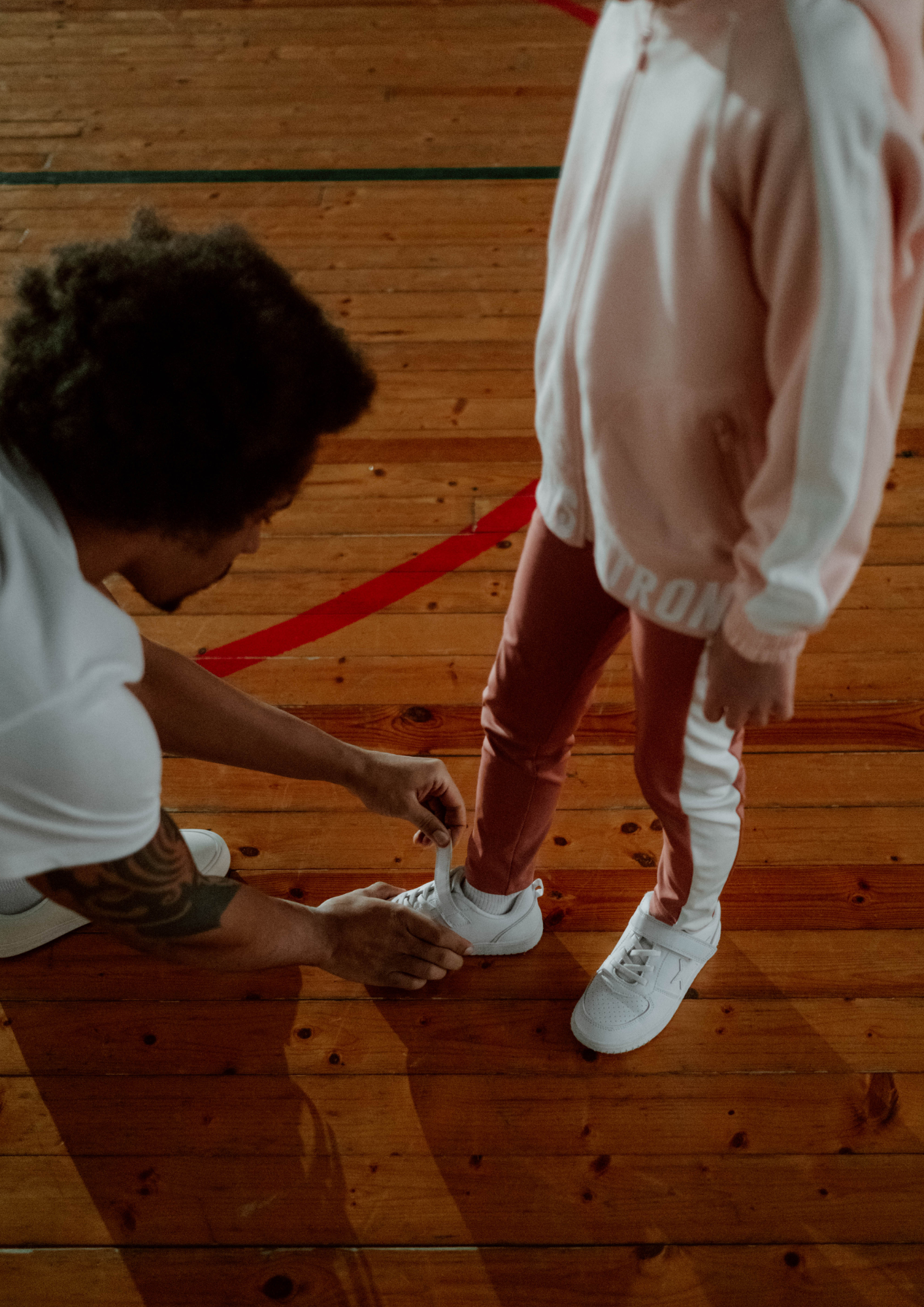
I was kneeling in the hallway holding a shoe, negotiating with a three-year-old who had strong views about that shoe. “We're late,” I heard myself say in a very reasonable voice, “we agreed about this yesterday; help me understand what's changed?” It took a moment to register that I was running a performance conversation with a toddler, and worse still, that I'd been doing it for months.
I'd spent over 15 years in human resources and executive coaching before I had children. Performance reviews, restructures, succession plans, and more difficult conversations than I could count. I thought I understood people and I assumed at least some of it would transfer to parenting. Almost none of it did, or at least not in the way I expected.
Management is a contract. You set expectations, you give feedback, you measure, you adjust. It works because both people choose to be in the room and either of them can leave, and it's that last part that matters. A child agreed to nothing and a child can't leave. Every tool I had was built for a relationship with an exit and I was now in one that had none.
I got this wrong for a good while. I ran my girls' childhoods a little like projects, with outcomes and timeframes. I tracked their early weeks on a spreadsheet with feeds, nappy changes, and sleep, and I had sticker charts for potty training. You name it, I tracked it. There was a version of them I was quietly working towards and I could’ve described it to you in detail.
Children can feel that. They know when they're being developed rather than enjoyed, and even when mine were very small, they still knew.
What did transfer surprised me. The best managers I worked with weren't the ones with the tightest systems, they were the ones who noticed. They could tell when somebody's work had changed before that person said a word, and they'd ask about it without turning it into a performance issue. That's most of the job at home too, because behavior is almost always information.
The other thing human resources trains you early is not to take it personally. When an employee is being difficult, a good manager asks what's going on for them rather than what's wrong with them, and that small shift in the question changes what happens next.
Then it ran in the other direction, which I didn't expect at all. Raising two girls has made me considerably better at leading adults. I understood in theory that development doesn't happen on a timeline you set, and that people go backwards under stress without it meaning they've failed. But I didn't know it in my body until I'd spent the better part of a year on that hallway floor dealing with shoes.
It also made me careful with the word “potential.” In corporate life we talk about a person's potential constantly, which sounds generous and is often a polite way of being disappointed in who somebody is right now. The same trap is set at home and it does more damage there, because a child has nowhere else to go for a second opinion on themselves.
We've moved countries many times since that hallway. My girls are teenagers now and I've watched them walk into a new school knowing nobody, over and over again. These days we're out the door at 6:40am for a school run that's over an hour each way, and they manage it without much complaint. What's held them steady through all of it has never been the systems, it's whether they’ve felt known.
So if you're in the early years, deep in the routines and the charts and the advice, the structure is fine and it genuinely helps. Frankly there's no virtue in chaos, just don't mistake it for the job. You manage what a person produces and you raise who a person understands themselves to be, and only one of those will still matter in 20 years time.
About the Author
Emily Rogers is a transition and leadership coach and the founder of The Leap to Lead. A farmer's daughter from South Australia, she has spent more than 20 years living and working across seven countries, and moved to Bangkok in April 2026 with her husband and two teenage daughters. Find out more on theleaptolead.com