
Raising Daughters With Body Confidence
By Keren Granit
By the time many girls reach their teenage years, body image worries are already deeply rooted. Parents often assume these concerns emerge in adolescence, but the truth is they start much earlier. Children begin forming ideas about their bodies in primary school, sometimes even before. They are listening long before we realize it.
They hear how we talk about food. They notice how we describe our own bodies. They pick up on what gets praised, what gets criticized, and what seems to matter most.
In a fast-paced, image-heavy environment like Bangkok, where social media, advertising, and comparison are constant, these messages add up quickly. The encouraging part is that body confidence is not something girls either have or don’t have. It is something we can gently build at home, every day, through small conversations and daily habits.
Body image begins at home
Before children ever criticize themselves, they observe the adults around them. They notice if we skip meals or constantly diet. They hear if we complain about our stomachs or thighs. They see whether we treat food with fear or ease.
These everyday behaviors quietly teach them what a body is supposed to be. If they grow up hearing that bodies are problems to fix, they learn to search for flaws. If they grow up seeing bodies treated with respect and care, they learn that bodies are simply part of being human. The tone we set at home often becomes their inner voice later on. And it starts with how we speak.
Talk about what bodies do, not how they look
One of the most powerful shifts parents can make is surprisingly simple. Move the focus away from appearance and toward function. Children benefit from learning that their bodies are tools for living, not objects to evaluate. When we highlight strength, energy, movement, and capability, we help them see their bodies as helpful and trustworthy.
A body that climbs, runs, carries a backpack, hugs friends, and explores the world feels valuable. A body that is constantly judged for how it looks feels like a project that is never good enough.
Over time, this small shift changes how girls relate to themselves. Instead of asking, “How do I look?” they begin to think, “What can I do?”
Create a relaxed food environment
Food language plays a bigger role than many parents realize. When foods are labeled as “good,” “bad,” or “junk,” children learn that eating is tied to morality. They may start to feel proud, guilty, or ashamed based on what they eat rather than how they feel. This can create tension around food and sometimes lead to restriction or overeating.
A calmer, more neutral approach helps children trust their bodies. When food is presented as fuel, enjoyment, and nourishment rather than something to earn or avoid, kids are more likely to eat in tune with hunger and fullness. Balance becomes natural instead of forced.
This foundation protects them later, especially when dieting culture and peer pressure start to show up.
Be thoughtful with compliments
Many of us grew up hearing that being thin was the ultimate compliment. Without meaning to, we sometimes repeat that message.
But even positive comments about weight can send a strong signal. If thinness gets praise, children may learn that staying small is important for approval and love. That pressure often increases during puberty, when bodies naturally change shape.
Broadening what we notice makes a difference. When we consistently acknowledge effort, kindness, creativity, and resilience, appearance becomes just one small part of identity rather than the main focus. Girls who feel valued for who they are tend to worry less about how they look.
Model the behavior you hope to see
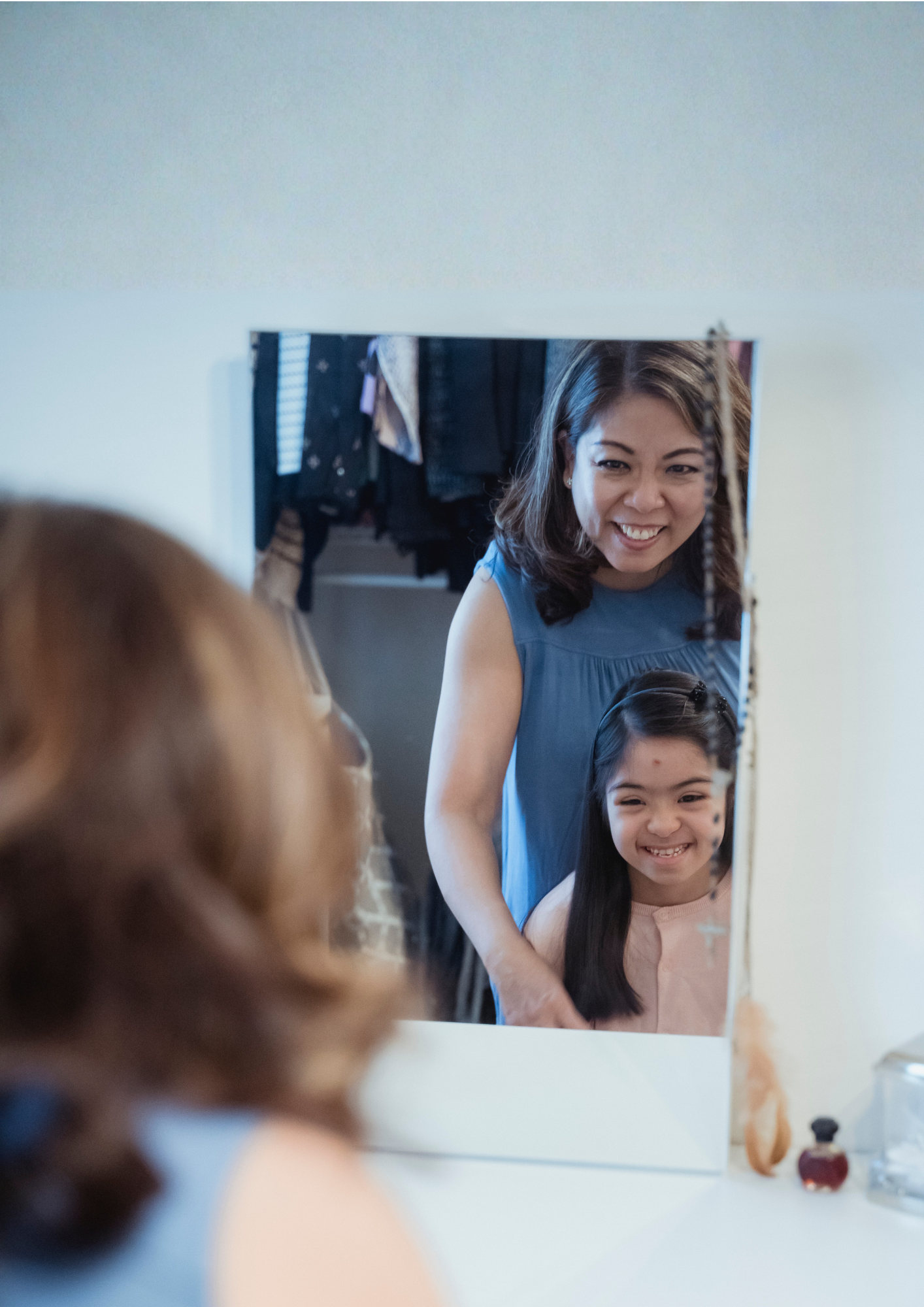
Children learn more from what we do than from what we say. We can talk about body acceptance all day, but if they see us criticizing ourselves in the mirror or constantly chasing the next diet, the message becomes confusing.
Modeling self-respect does not mean pretending to love everything about your body. It simply means treating yourself with basic kindness. Eating regularly, moving because it feels good, wearing clothes that fit now instead of “one day,” and speaking neutrally about your appearance all send powerful signals.
When a daughter sees her parent treating their body with care rather than frustration, that becomes her normal.
Prepare them for the digital world
Today’s children grow up surrounded by curated images. Even adults sometimes forget how filtered and edited those images can be. Kids rarely know this unless we explain it.
Teaching media awareness early can be incredibly protective. When children understand that photos are posed, retouched, and selected from hundreds of attempts, they are less likely to compare themselves to unrealistic standards. It becomes easier for them to see social media as entertainment rather than truth.
Keep communication open
Even in supportive homes, challenges will come up. Friends talk about diets. School culture influences them. Social media sneaks in. It is impossible to shield children from everything. What matters most is that home feels safe.
When girls feel comfortable sharing worries or insecurities without fear of being dismissed or corrected, they are more likely to ask for help. Listening calmly and taking their concerns seriously builds trust that lasts into the teenage years. That trust is often more protective than any single strategy.
The bigger picture
Raising a body-confident daughter is not about saying the perfect thing every time. It is about thousands of small, consistent messages over many years.
Messages that say her body is not a problem to solve. That food is not something to fear. That her value is not measured by size or shape. Eventually, these ideas become her own beliefs. The goal is not for her to think she looks perfect. The goal is for her to know that how she looks is only a tiny part of who she is.
As this simple example shows a small change in wording creates a huge difference in perspective.
Not this: “You look thinner today. That’s great.”
Instead: “You look strong and full of energy today.”
The first ties worth to size. The second connects value to vitality and capability. It is a subtle shift, but repeated over years, it helps build a completely different inner voice. And that voice is what stays with her for life.
About the Author
Keren Granit is a dietitian based in Bangkok, specializing in family and pediatric nutrition. She helps parents confidently guide their children’s eating habits, from picky eating to healthy growth. Passionate about evidence-based, practical advice, she shares resources and guidance at EatWithKeren.com.